Backlight logo

Backlight

Archives
Subscribe

Backlight Backlight

Archive

"What is it like to read?": Some reading on reading

I’ve been doing some groundwork for a half-baked intellectual project to scratch an itch I’ve had for a long time.

I want to understand and articulate what it’s like to read something: what happens physically, psychologically, phenomenologically, materially, socially, ontologically, hermeneutically, cognitively, emotionally, metaphysically — name an adverb, I want to try to figure out.

I want to have a philosophy of reading that’s flexible enough to cover everything from literature to street signs to sexting, and that treats reading and writing as a first-order encounter comparable to our experience of spoken language. Because for everything post-structuralism promised to break down the speech/writing binary and stop thinking of writing as a second-order sign of signs, we never really got there.

Part of this is motivated by the antipathy I have to the idea that reading teaches students how to empathize with the other, and that this above all else is the political value of reading and literature.

#183
July 6, 2025
Read more

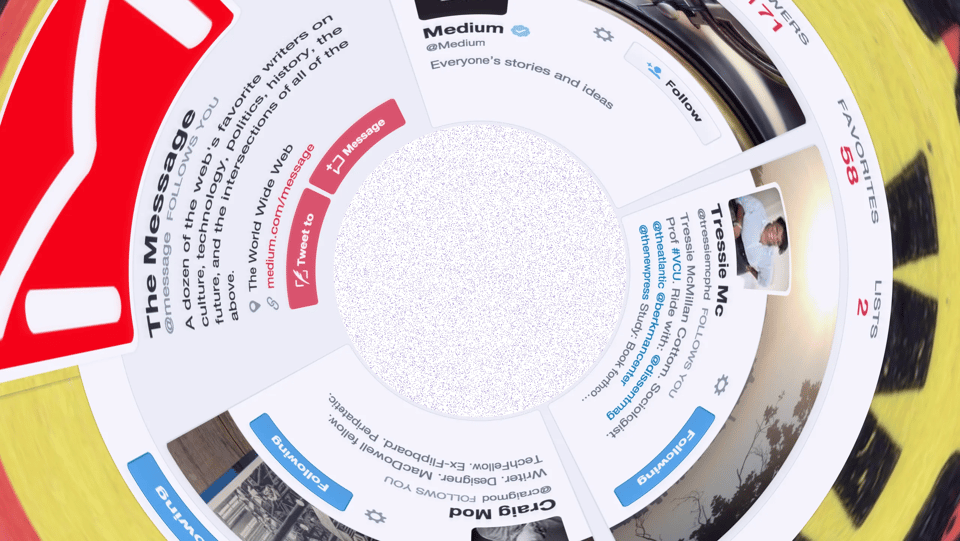
What It's Like to Run the Twitter Handle "@message"

A graphic showing a spiral of the Message, Medium, Tressie MC, and Craig Mod's Twitter profiles

Or, why Twitter is hard

1. The Mentions

In retrospect, maybe we should have gone for @themessage,” “@the_message,” or even “@mess_age.” But those were taken, and @messageatmedium just seemed too darn long.

#182
January 19, 2025
Read more

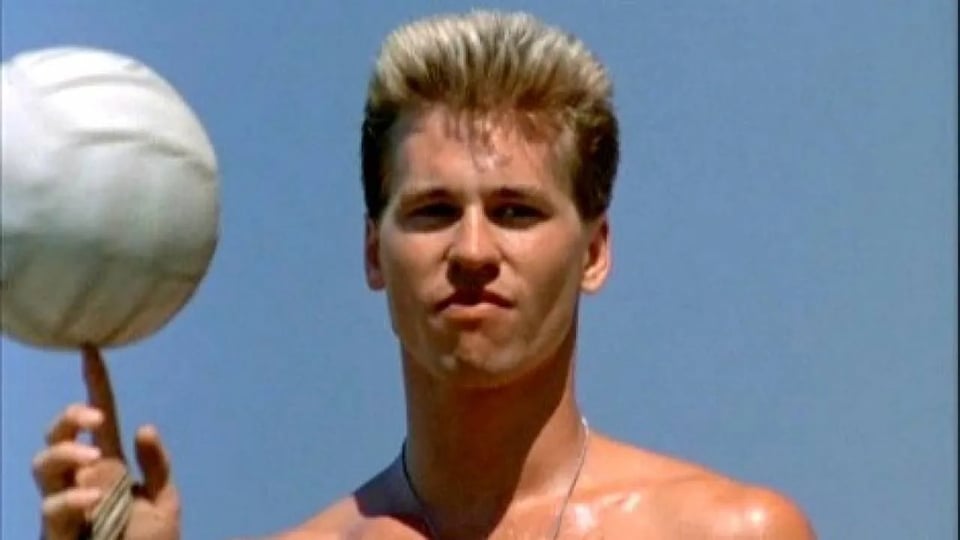
The Iceman List

Classic movie antagonists who were actually pretty much right all along

Iceman (Val Kilmer) spins a volleyball on the end of his finger, from Top Gun.

If you haven’t seen Top Gun in a while…

I strongly recommend it. It’s one of those movies — a lot of movies from the 1980s feel this way — that didn’t hold up for a long time, but now it does. People grow, times change; you gain new perspective and learn to appreciate different things about both movies and the times that produce them.

#181
January 18, 2025
Read more

Falling In Love With A Hard Drive

or How To Name Your Computer and Other Machines: A comparative study of how users bring the devices and networks they use every day even closer.

For me, as for so many, it began with an external hard drive. Its name was “Dante.”

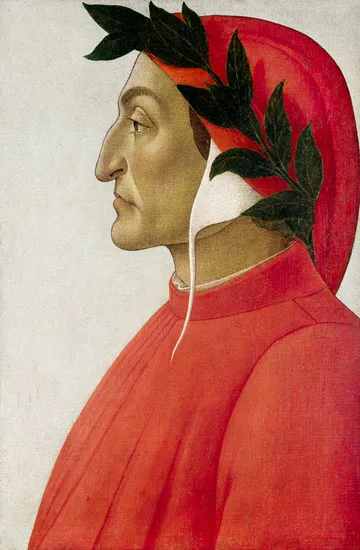
A portrait of Dante Alighieri
This guy is handsome, but my hard drive looked nothing like this.

My operating system may have once been content to insist I call my floppy drive A, my hard drive C, and any additional drives D, E, F, and so forth (excepting only U, which was typically reserved for the network). Cutesy Macs may have had pet names, but on a DOS or Windows PC, there was no permanent record of warm familiarity with your machine’s parts, even if you had lovingly installed, formatted, and partitioned them yourself. A device’s logical address was its only address.

#180
January 17, 2025
Read more

Mad Men and the Coke Jingle Theory

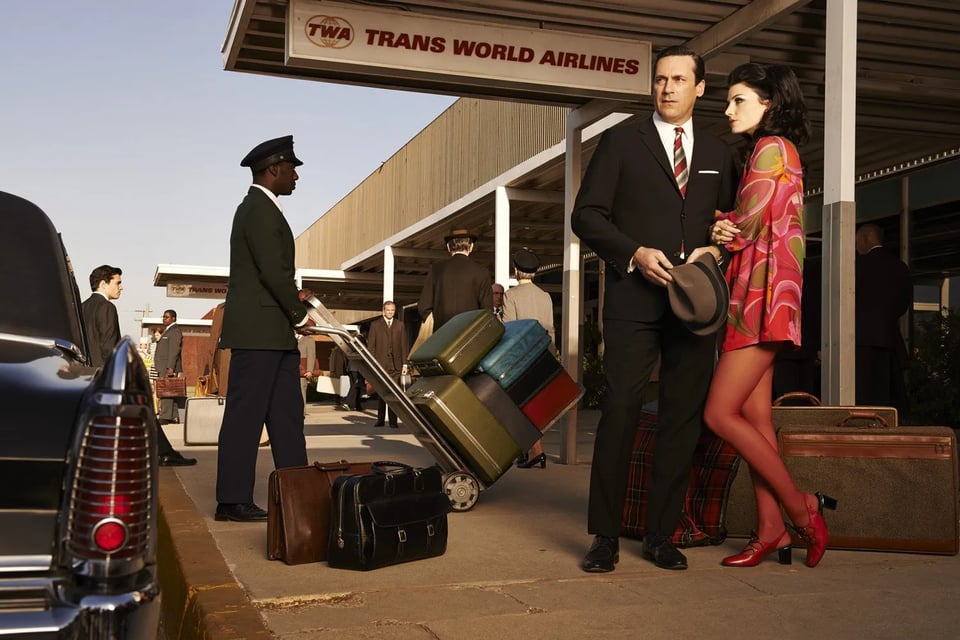
A promotional poster from Mad Men showing Don Draper and a young woman at the entrance to an airport. A Black porter wheels their luggage into a door marked "Trans World Airlines."

With special reference to Roquel “Billy “Davis, the Black advertising legend who co-wrote and produced “I’d Like To Teach the World to Sing”

“It would be a lie to portray Sterling Cooper and Price’s world as integrated.”
— Matthew Weiner, The Charlie Rose Show

Sunday night was the series finale of Mad Men, AMC’s prestige drama about advertising executives navigating their way through the 1960s, ending in 1970. While critics and fans made bets on which characters would live and die, fall for each other or wind up alone, a guiding principle for many was the idea that the end of Mad Men would directly dovetail with an important piece of pop culture. And since the show made strong thematic use of period-specific music in each of its seasons, there were even predictions on what 1970 song might play the series out. As it turned out, Mad Men touched all the bases, ending Don Draper’s story with the 1971 Coca-Cola commercial jingle, “I’d Like to Buy the World A Coke.”

#179
January 16, 2025
Read more

Everything I Needed To Know About Writing, I Learned from "Paid In Full"

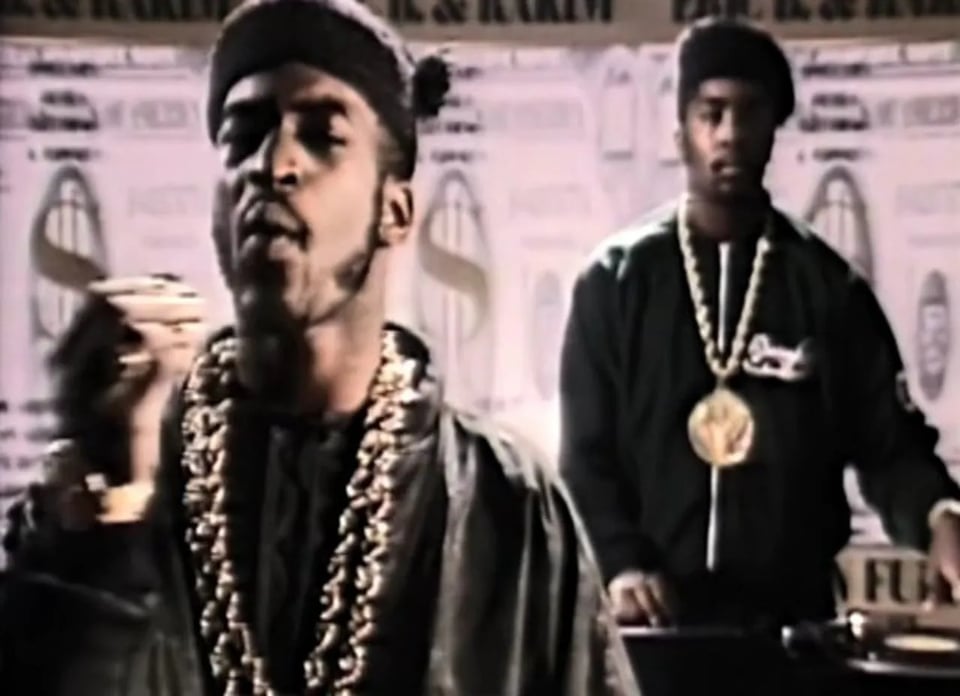
A still of Eric B and Rakim from the video for "Paid In Full." Eric and Rakim both have track suits, kangols, and gold chains. Rakim is making a "money" gesture" while Eric B spins turntables behind him.

Nearly twenty-eight years after its release, the album offers the best look at the lives of writers.

When people talk about finding good writing music, they’re usually talking about music to write to. They want something ambient and ethereal, animated and propulsive, or immersive and complete. They want something to ignore, something that lets them ignore the rest of the world, or even something that lets them pretend they aren’t writing at all. Whether you’re a student hunkering down for a term paper, an aspiring novelist, or a professional nonfiction writer trying to get an assignment out the door with just a dram of art still on it — music is a tool to help you avoid the ugly, awkward gap between beginning and end.

Eric B and Rakim’s album Paid In Full is not precisely that. Their debut is too immediate, too real, to help you avoid anything. But it’s not just an album of danceable, hard-hitting, Golden Age hip-hop songs either. It’s that rarest of things: a collection of amazing writing, by a writer, for writers, about writing, that you actually enjoy. It doesn’t feel like work.

#178
January 15, 2025
Read more

Watching Football After A Traumatic Brain Injury

Sometimes it feels like long after our religious and national holidays have come and gone, Super Bowl Sunday will endure. Along with Black Friday — not Christmas, Black Friday — Super Bowl Sunday is one of the few true American holidays, and maybe the one that best shows us who we are as a people.

Everything about the biggest day of the world’s biggest sport makes the NFL seem invincible. Right down to the Last Days of Rome extravagances the league insists that the host cities provide.

Even the scandals, such as they are — Deflategate and continued rumors of widespread PED use hound both teams in this year’s Super Bowl—are just fuel for football’s fire. Two teams so competitive that they might turn to drugs (that wouldn’t even be illegal outside the context of football) or cheating (in an almost clownish, get-every-edge-you-can mania) just prove that reaching the Super Bowl is worth almost any price.

None of this is an existential crisis. All of it is good if it points fans toward the football field and away from the broken human beings left in football’s wake. All of it is good if it ushers in the next generation of fans — as long as it makes football continue to seem inevitable.

#177
January 14, 2025
Read more

Back to the Future, Time Travel, and the Secret History of the 1980s

A blurred picture of Doc and Marty from Back to the Future

Each epoch dreams the one to follow.
— Jules Michelet

Every epoch, in fact, not only dreams the one to follow, but in dreaming, precipitates its awakening.
— Walter Benjamin

Now that it’s 2015, we have (plus or minus a few months) caught up with the farthest future shown in the Back to the Future trilogy. You almost certainly know this already, because there have been dozens of stories about it. For the past few years, there have been hoaxes proclaiming that this day is the day seen in Back to the Future II, complete with photoshopped chronometers. (Now, there’s actually an online Back to the Future hoax generator for one-stop hoaxing.) The first stories comparing our present to the movie’s imagined future hit the web before 2014 was even finished. And this is after years of revisiting and anticipating what was to come.

#176
January 13, 2025
Read more

Stephen Colbert, First Star of the YouTube Age

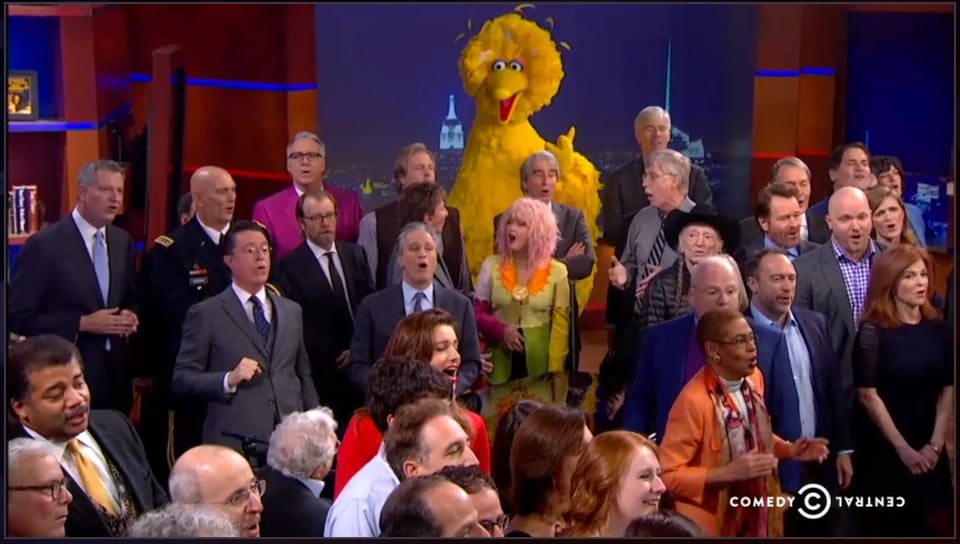
Stephen Colbert, singing with dozens of guests

When The Colbert Report premiered nine years ago, Comedy Central tried something different. It made the first week of episodes available to download and watch online. If you didn’t stay up to watch the show, or you didn’t have cable, you could still see Stephen Colbert try to turn his Daily Show character into a new kind of television show, one whose politics, format, and satirical tone were particularly suited to the mid-2000s internet.

It was a rare case of a network blessing the still-emerging practice of video sharing online. The Colbert Report had only an eight-week initial order: the combination of internet fans returning to watch the show live and the strong Daily Show lead-in helped win it a year.

It was the future. Of course, it couldn’t last.

#175
January 13, 2025
Read more

Why James Cameron's Aliens is the best movie about technology

My friend Patrick has a joke. Maybe you’ve heard it.

Everybody thinks "The Social Network" is the best movie about forming a new startup, but they are wrong. The best movie is "Ghostbusters".

— Patrick Ewing

(Patrick was an engineer at Twitter when he wrote this, so I believe him.)

It’s a great line, not least because it’s probably true. It also illustrates an important principle: most movies (and books, and maybe even companies) that make a big deal about how much they’re about technology are rarely if ever the best at actually being about technology.

#174
January 12, 2025
Read more

A Study in the Writing and Acting of Whiteness

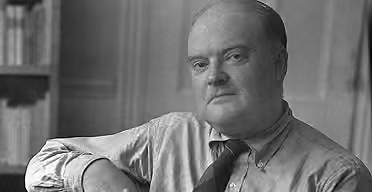
A black and white photo of Edmund Wilson in his office
Edmund Wilson, 1951

Edmund Wilson’s book To the Finland Station is subtitled “A Study in the Writing and Acting of History,” and it’s a good one for his book. You could call it a history of a century of socialism (roughly 1817-1917), but Wilson is interested in intellectual revolution as much as (or really more than) political revolution. He writes at greater length about post-Revolutionary historians like Michelet and Renan than about what he sees as the minor political figures that prefigured Lenin. And his Marx and Engels are above all writers, theorists, and psychological curiosities who somewhat accidentally happened to have been involved for a brief time in political organizing. He wants to better understand the history of people who sought to better understand history, and write about them in ways they never would or could have written about themselves.

As an American writing mostly about 19th century Europeans in the 1930s, Wilson necessarily has some blind spots. Anti-semitism is not particularly one of them, although he does exhibit a philo-semitism that sometimes turns cartoonishly on its head. He is pretty thoroughly obsessed with national, religious, and ethnic origins for all of his characters: Lenin’s German mother gets credited with everything about her son that seems to disprove Russian stereotypes. But Marx’s Jewishness is turned over the most thoroughly and quasi-psychoanalytically (with an attention to physical detail that borders on the phrenological).

#1
December 31, 2024
Read more

Wedding Vows

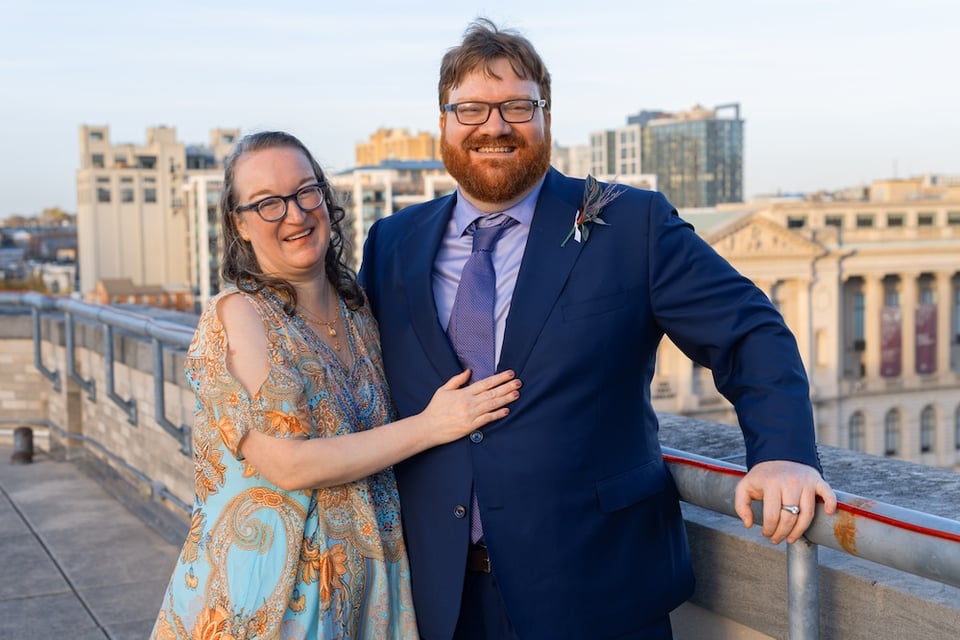
I got married to Karen McGrane on November 4, 2022 in a beautiful ceremony officiated by Janie Porche at the Franklin Institute in Philadelphia.

Tim and Karen on the rooftop at the Franklin Institute, dressed all fancy
Tim and Karen on the Franklin Institute rooftop

Many people know that Karen and I first got to know each other online, via a close group of mutual friends, but were never in the same physical space until the day I moved into her house. (Now our house.)

All credit goes to Karen: She slid into the DMs first. I kept finding ways to get her to come back there, but she was the one who was brave enough to openly declare her crush. She saw our whole future together while I was still trying to figure out if she liked me or like-liked me. (She was already in love with me.)

#3
December 31, 2024
Read more

How to Command Attention and Authority in Media

My old pal and blogging partner Robin Sloan recently published an edition of his monthly newsletter where he puts on his media critic hat, in reaction to pieces by Max Read and Kyle Chayka, who conclude that media is now a personality cult you have to cultivate in newsletter writing just like YouTubers and TikTokers. Robin writes:

Everything has always been a cult.

If you think that word has negative connotations, squelch them; make the label, for a moment, perfectly neutral. I’ve long believed that cults are central to books: their history and longevity. It is no accident that the plot of Mr. Penumbra’s 24-Hour Bookstore revolves around a secretive, long-lived organization.

Who are the scholars of a novel like Ulysses, if not a cult? Who are the readers of Marvel comics, if not a cult? What is it to claim that any work is part of a canon, if not to say, it has a formidable cult?

The error is assuming cult membership must be exclusive. All of us, preoccupied by media in all its forms, we are members of many cults — dozens, hundreds — with densely overlapping memberships.

A work of art is nothing without its cult! Literally nothing. Inert marks on pages closed to the light; derelict bits in the coldest region of the database…

[Cults] have been necessary, at all times in all places, for the long-term transmission of art of any/every kind. Maybe the difference, here and now in the short 2020s, is that you need one right from the start.

In response, I wrote Robin a very dense email (I write a lot of dense emails), which I will cite in full (with added links) in italics below, then expand on here.

TIME FOR SOME WEBERIAN THEORY

#173
December 20, 2024
Read more

“Alexa Will Not Replace Us”

The Writers Guild of America is on strike, bringing movie and television production to a halt. This affects media companies across the board, but one of them is Amazon, which is not exactly like other media companies. It's primarily a retailer as well as a technology and infrastructure company. However, it's undeniable that the strike is happening in large part because of companies like Amazon and what they represent: the transformation of media by digital technologies like streaming video and artificial intelligence, and the further transformation of the media business model these technological innovations have introduced.

Many of the WGA's demands are about changing the pay rate for streaming video: getting a higher percentage of residuals for overseas streaming, and establishing a viewership-based streaming residual in addition to a fixed residual. The idea is to partially account for the substantially greater amount of time spent and revenue earned via streaming and the creation of new global video markets since the last time the WGA and the Alliance of Motion Picture and Television Producers (AMPTP) came to an agreement. The AMPTP wants to pay a lower overall rate and a carve-out for streaming services with smaller overseas viewership.

Another demand is about the potential use of AI in script production. The WGA is looking for a targeted ban: no AI-written source material, writing or rewriting text, and not using writers' scripts to train AI. The AMPTP countered this position by offering “annual meetings to discuss advancements in technology.”

Source: WGA, via Rolling Stone
#172
May 3, 2023
Read more

Amazon's Grocery Concessions

I've been arguing that Amazon's heroic phase is over. To which you might be asking, "what 'heroic phase'? Amazon's always been a destroyer of industries, values, and communities, an exploiter of underpaid labor and infrastructure it didn't earn." Wow, harsh, imaginary reader! Let's just stipulate that along with all that, there was also an implicit promise that if you had a problem, Amazon had the technical and logistical wherewithal to solve it. It also had the money and the ambition to spend whatever resources and energy were necessary to take on virtually any challenge, and iterate quickly if needed. They might have put your local bookstore (or bookstore chain) out of business, but it wasn't like they didn't replace it with something new, different, and cheaper for the customer. It wasn't just that interest rates were low and growth was easy to invest in: Amazon was a company with revolutionary potential, maybe uniquely so.

You can see the dimming of this potential everywhere in the last few weeks — another massive round of layoffs, the company taking a wait-and-see approach on consumer-facing AI (which might after all be prudent), scaling back customer-friendly benefits like free returns (and even free shipping!), and halting construction on its much-hyped HQ2 project, among others. There are probably over a thousand different cost-cutting measures that suggest Amazon is focused more on near-term profitability and keeping its powder dry rather than investing in cornering new markets or building up capacity.

To pick one example, let's look at the grocery business.

When Amazon purchased Whole Foods in 2017, it seemed prime to disrupt the grocery business like it began to do with books two decades before. Online ordering and same-day delivery were nascent at best: Amazon seemed like the best candidate to change all that.

#171
April 16, 2023
Read more

A Reading List for the End of the Heroic Phase

Welcome back to the Amazon Chronicles, a newsletter about Amazon and the companies, communities, and technologies in its shadow.

First, some housekeeping: I had expected to send this newsletter out more than a week ago, but I managed to contract a non-COVID illness that briefly put me out of commission. No problem, I thought, I'll put the newsletter out midweek and everything will be fine. Then we got a telephone call from a dog breeder letting us know that, contrary to our expectations when we joined the queue, a new Boston Terrier puppy would be available for us as soon as the next week.

So instead of putting out a newsletter on Tuesday, I drove from Philadelphia to central Pennsylvania and picked up the puppy now known as Orzo.

A black-and-white Boston Terrier puppy stares soulfully at the camera.
Nobody understands you, but Orzo does
#170
January 28, 2023
Read more

New Year's News Roundup

There has been so much Amazon news piling up over the holiday break that I figured it would be best to take a short break from my essays on Amazon, the tech industry, and late capitalism. So instead we'll focus on… the immediate fallout of late capitalism on the tech industry, specifically Amazon. There will just be a lot more links (and a lot fewer Hungarian philosophers).

The biggest story is that Amazon's 2023 layoffs have begun, and they're nearly twice as large as was initially projected: approximately 18,000 people will be let go from the company. 18,000 people is hard to wrap your head around, so I tried to come up with some comparable figures:

A typical freshman class at my alma mater, Michigan State University, a very large public university, has about 9000 students. So twice that number of people will be losing their jobs in this round of layoffs at Amazon.

There were also about 9000 homicides in the United States in 2022. (This was one of the higher murder rates in the last twenty years.) So more than twice as many people as were murdered in the entire US will lose a job at Amazon.

#169
January 11, 2023
Read more

Two ways to think about decline

The end of the heroic age of the tech giants does not imply that tech giants are in decline, but confusing the two is natural. Observers and analysts usually talk that way about companies, especially tech companies and the platforms they enable: they grow, mature, then decline (in relevance if not in revenue).

In general, what characterizes this phase of the tech giants' development is a shift from unlocking user creativity and customer value to doubling down on surveillance, usually augmented by AI. Mass surveillance was always an important emergent part of the tech giants’ strategy, but was arguably secondary to delighting users and giving them greater capabilities. Now surveillance and nonhuman solutions are dominant, and the creative possibilities are now almost all residual.

(Yes, this "emergent/dominant/residual" schema is a Raymond Williams reference.)

The stock market is one measure of growth and decline, and it's fair to say the stock market is worried about Big Tech. Last month, The New York Times wrote about tech losses and their drag on the overall stock market:

#168
December 17, 2022
Read more

Amazon's heroic phase is over

What does it mean to say "the heroic phase of the tech giants is over?"

The phrase "heroic phase" has some history. It's from Marxist history and cultural theory. The idea was formulated by Marx himself, but popularized (for a certain value of "popular") by the Hungarian thinker Georg (or György) Lukács. It's part of a theory of history that states that every group that comes to power has to struggle against the dominant group that preceded it, and is in turn supplanted by another group after collapsing under its own contradictions.

The idea of a "heroic phase" is usually applied to the bourgeoisie, roughly from the Renaissance to the mid-19th century. The period was the age of the great middle-class revolutions against the church, against monarchs, against the aristocracy, in the name of political and economic liberty, reason, and constitutional republics. Scientific and literary revolutions in these centuries also helped usher in humanism, empiricism, and realism. Global colonialism by European agents helped make all of these achievements possible.

The bourgeoisie and their allies were fighting for their own interests, but their revolution took the shape of greater freedom for everyone (or at least men in the non-colonized parts of the world), and they mostly formulated their political and scientific ideas in terms of universal laws.

#167
December 11, 2022
Read more

Another beginning

Welcome back to Amazon Chronicles, your admittedly irregular blog/newsletter about all things Amazon – plus the users, customers, workers, and industries in its shadow.

It's been two weeks since my last newsletter – I took a break for the US's Thanksgiving holiday, and very sadly, our beloved Boston Terrier Beedie passed away.

In that time, Twitter (the company and the platform) further deteriorated under the already-infamous leadership of Elon Musk. I'm still reading and posting there [@tcarmody], but I've also moved to Mastodon and Post.news.

I also concluded that I should get my newsletter off of the Twitter-owned Revue platform as quickly as possible. So this newsletter is coming to you from Ghost, my fourth newsletter platform (Tinyletter => Substack => Revue => Ghost, which isn't counting my time using Mailchimp to write Kottke.org's newsletter), and my third in a little more than a year. Here's hoping it sticks: I certainly would rather not move house again.

#163
December 2, 2022
Read more
Older archives  
Website favicon
Website favicon
Website favicon
Website favicon
Website favicon
Powered by Buttondown, the easiest way to start and grow your newsletter.